Why Yunnan
Yunnan sits in the southwestern corner of China, sharing borders with Myanmar, Laos, and Vietnam. It is the most ethnically diverse province in China, home to 25 of the country's 56 recognized minority groups. The landscape shifts from subtropical river valleys in the south to 6,000-meter Himalayan peaks in the northwest — more ecological zones in one province than most countries span entirely.
For foreign travelers who have done or want to skip the Beijing-Xi'an-Shanghai circuit, Yunnan offers something different: old towns where Naxi culture has persisted for centuries, mountain lakes with Bai fishing villages on their shores, monasteries operating at 3,000 meters, and a hiking route — Tiger Leaping Gorge — with a devoted following among trekkers for thirty years.
The Four Core Destinations
Dali — The Starting Point
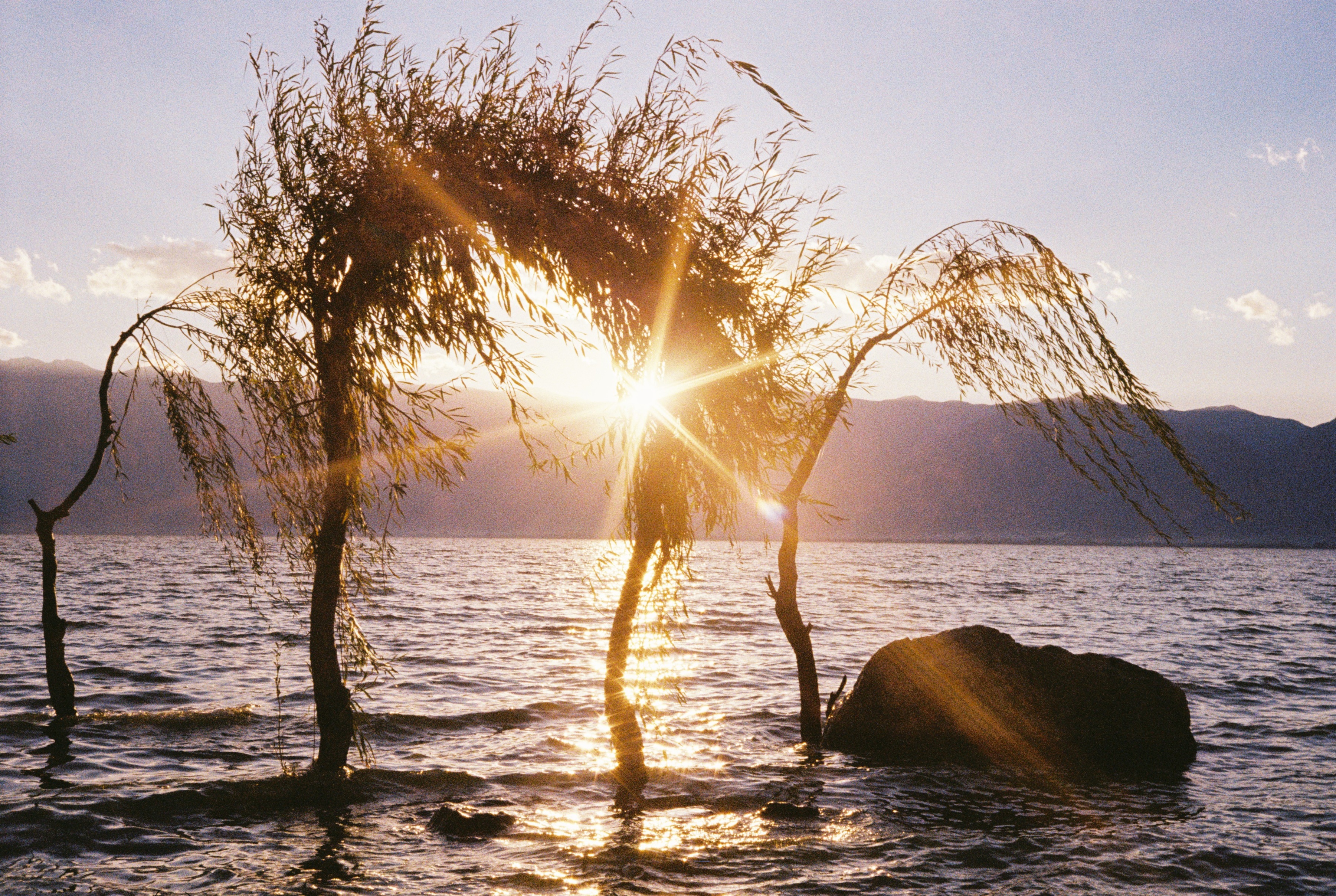
Dali sits at 1,900 meters between Erhai Lake and the Cangshan mountain range. It is home to the Bai minority, known for distinctive white-and-blue architecture, tie-dye textiles, and a relaxed culture that has been drawing travelers since the 1980s backpacker era.
The old town (大理古城) is a walled city of cobblestone lanes, courtyard guesthouses, and cafes that have served long-stay travelers for decades. Commercialized, but not aggressively — the old town has been preserved enough that walking it feels like inhabiting a real place rather than a theme park.
Erhai Lake is enormous (250 square kilometers) and ringed by Bai fishing villages that most visitors in the old town never find. Renting an electric bike and circling sections of the lake is one of the most rewarding half-days in Yunnan. The villages on the eastern shore give a clearer picture of Bai life than the old town does.
Food in Dali: Bai cuisine is milder than most Chinese cooking. Milk fan (乳扇) — a rubbery, grilled fresh cheese — is the local specialty that surprises most visitors. Erhai fish, slow-braised pork, and pickled vegetables are staples.
How long: 2 to 3 days is sufficient. Extending to 4 or 5 rewards travelers who want to explore more villages or use it as a base for day trips.
Getting here: Fly directly to Dali airport, or fly to Kunming and take a 3-hour high-speed train to Dali. From Dali train station, take a shuttle or taxi to the old town (20 minutes).
Lijiang — Old Town and Naxi Culture
Lijiang sits 180 kilometers north of Dali. Its old town (丽江古城) was built by the Naxi people over 800 years and is a UNESCO World Heritage Site.
Honest assessment: Lijiang old town is heavily visited and shows it — on weekends and holidays, the main lanes feel overwhelmed by Chinese domestic tourism. Bars, souvenir shops, and tourist restaurants dominate the core.
The experience depends entirely on where you go. The northern and eastern quarters, away from the central squares, are quieter and more residential. Early mornings — before 8am — reveal a completely different atmosphere.
What makes it worth visiting: The architecture is among the best-preserved Naxi building traditions in China. Ancient canals running through the streets, fed by Jade Spring water, make the town unusually beautiful. And Lijiang is the unavoidable hub for accessing Tiger Leaping Gorge and Shangri-La to the north.
Black Dragon Pool Park: 5 minutes from the old town. The most-photographed view in Lijiang — the pool, old town rooflines, and Jade Dragon Snow Mountain behind everything. Best in morning light before crowds arrive.
Jade Dragon Snow Mountain: At 5,596 meters, it dominates the skyline north of Lijiang. A cable car reaches 4,506 meters (bring a jacket even in July — it is cold). The landscape at the top is extraordinary. Book cable car tickets in advance online.
How long: 2 to 3 days, primarily as a base for excursions rather than treating the old town as a multi-day destination itself.
Getting here: Fly directly from Kunming, Chengdu, Beijing, or Shanghai. Or take a 3-hour bus from Dali.
Tiger Leaping Gorge — The Flagship Trek
Tiger Leaping Gorge (虎跳峡) is one of the deepest river gorges in the world. The Jinsha River (upper Yangtze) runs between two peaks — Jade Dragon Snow Mountain (5,596m) and Haba Snow Mountain (5,396m) — with the river more than 3,000 meters below the surrounding ridgeline.
The high trail (高路) is a 2-day, 22-kilometer hiking route along the gorge's upper edge. It is the reason many serious travelers specifically plan to visit Yunnan.
The hike:
Day 1: Qiaotou village (trail start) → Naxi Family Guesthouse or Tea Horse Guesthouse (approximately 7 hours). Significant elevation gain in the first half, easier descent in the afternoon. The trail is clear but not a groomed path — reasonable fitness and proper footwear required.
Day 2: Upper guesthouse → Tina's Guesthouse → Lower road → Walnut Garden (approximately 5 to 6 hours). Steep descents to river level. The optional 28 bends (28 switchbacks on the cliff face) is not for those who dislike heights.
Season: Late March through early June, and September through November. July and August can have landslide risk from monsoon rains — trail sometimes closed. Check current conditions through guesthouse websites.
Without hiking: The lower road is accessible by vehicle. A driver from Lijiang can reach the narrowest point of the gorge (30-meter gap) as a day trip. The view is dramatic without hiking.
Logistics: Take an early morning bus or shared minivan from Lijiang to Qiaotou (2 hours). Guesthouses along the trail are simple but good. Book ahead in peak season. Almost all are run by local Naxi families and serve home-cooked meals.
For foreign travelers: The trail has waymarks in English at key junctions. All major guesthouses have English-speaking staff accustomed to international hikers. This is one of the most foreigner-accessible adventure experiences in China.
Shangri-La — Tibetan Culture Without a Tibet Permit
Shangri-La (香格里拉) at 3,200 meters is the capital of Diqing Tibetan Autonomous Prefecture — the southernmost outpost of Tibetan cultural China. It does not require the special Tibet Travel Permit that restricts most foreigners from entering the Tibet Autonomous Region proper.
Songzanlin Monastery (松赞林寺) is the most important Tibetan Buddhist monastery in Yunnan, housing over 700 monks. Morning prayers are accessible to visitors. The monastery is a 15-minute drive from town and genuinely moving to visit.
The old town: Rebuilt after a 2014 fire, it is more polished than Dali or Lijiang but smaller and quieter. Tibetan-style architecture and the slower pace at altitude give it a distinct atmosphere.
Altitude: 3,200 meters causes symptoms in some travelers — headaches, fatigue, shortness of breath. Spend the first day resting and hydrating. Avoid heavy exercise and alcohol on arrival. Symptoms usually pass by day two.
Pudacuo National Park: 30 kilometers from town. Alpine lakes and meadows at 3,500 to 4,100 meters. Access by shuttle bus within the park. English signage and clear paths. The scenery is exceptional.
Getting here: Fly directly from Kunming, Chengdu, or Lijiang, or take the Lijiang-Shangri-La railway, which opened in November 2023. The road journey from Lijiang is still scenic and useful if train times do not fit your plan.
Horse Riding Near Lijiang and Shangri-La
A question that comes up again and again: where do you actually book the horseback riding you see in photos of Lijiang and Shangri-La, what does it cost, and who is it for? Both areas offer it, but they are different experiences.
Around Lijiang. The most established spot is Lashi Lake (拉市海, Lashihai), a wetland roughly 10 kilometers from the old town on the southern slope of Jade Dragon Snow Mountain. Local Naxi families run rides along sections of the old Tea Horse Road, through villages and forest, and these are usually paired with a short boat trip on the lake. Plan on a half-day once you include the transfer from town — around 4 to 5 hours. Meadows and foothills near Baisha, Yuhu village, and Yufeng Temple also offer shorter rides toward the base of Jade Dragon Snow Mountain.
Around Shangri-La. Riding here is on open alpine grassland — the Napahai (纳帕海) basin and Yila grassland, with lake reflections and snow peaks behind. Rides tend to be short loops led on foot by a handler rather than free riding, and are charged by time or by loop.
Rough cost — agree it before you get on the horse. Prices vary by operator, route, duration, and season, so treat any figure as indicative and settle the route, duration, and price before you mount up. At Lashi Lake the scenic-area management bureau publishes an "integrity" guidance price for the ride itself — roughly CNY 180 for about 40 minutes and CNY 260 for about 60 minutes per person (in force since 2024). But most visitors buy a bundled half-day package that adds the lake boat trip, a local lunch, and round-trip transfer from town, and those commonly run higher — on the order of CNY 300 to 460 per person. There are dozens of competing horse farms here and the area is known for pushing longer, pricier routes, so confirm exactly what your price covers. Around Shangri-La, Napahai / Yila grassland rides are short handler-led loops priced by the loop or by time — very roughly CNY 120 for a 20-minute loop up to about CNY 300 for an hour (on the order of CNY 100 to 200 per hour, and often negotiable), with any grassland or park entry charged separately. Booking through your guesthouse or an established operator is usually cheaper and more reliable than negotiating at the gate.
Altitude comes first in Shangri-La. The town sits at about 3,200 meters. Do not do anything strenuous, riding included, on your arrival day — give yourself a day or two to acclimatize first (see the Shangri-La notes above); common guidance is to save a ride for after you have adjusted. Lijiang, at around 2,400 meters, is far gentler.
Choose the operator carefully. Quality and animal welfare vary a lot from one outfit to the next. Around Lashi Lake there are dozens of competing horse farms, and around Napahai many roadside "grassland entrance" spots are privately run rather than official — some overcharge for a short, unremarkable ride. Pick a reputable, established operator (a guesthouse recommendation is a good filter), and walk away from anywhere the animals look poorly kept.
Who it suits: travelers who want a slow half-day in the countryside and some Tea Horse Road scenery, families, and photographers. It is not for anyone expecting a fast, independent trail ride — most rides here are gentle and handler-led.
Sample Itineraries
7 Days: Yunnan Essentials
10 Days: Yunnan with the Full Trek
12–14 Days: Yunnan + Guizhou
Add 3 to 5 days in Guizhou after Kunming. Fly Kunming to Guiyang. This combines Yunnan's Tibetan and Naxi culture with Guizhou's Miao and Dong minority villages for the most complete southwest China experience available.
Practical Notes for Foreign Travelers
Language: English is spoken at Tiger Leaping Gorge guesthouses and at hotels in Dali and Lijiang old towns. Outside these zones, English drops off. Amap works well for navigation. Google Translate's camera function is useful for menus.
Payment: Alipay and WeChat Pay work throughout Yunnan. Cash is occasionally needed in remote villages and very small guesthouses — carry some. ATMs are in all major towns.
Altitude: Lijiang at 2,400m, Shangri-La at 3,200m, Tiger Leaping Gorge trail peaks near 2,800m. If you have cardiac or respiratory conditions, consult a doctor before this itinerary. For most healthy travelers, the acclimatization is manageable with care.
Booking ahead: Dali and Lijiang are heavily visited during Chinese national holidays (October, May) and Western summer. Book accommodation in advance for these periods. Tiger Leaping Gorge trail guesthouses fill up quickly in peak season.
Getting here from the classic route: Yunnan connects most easily by flying or taking the train into Kunming, Dali, or Lijiang, depending on your route. Adding 7 days in Yunnan after a first-trip China route makes a strong alternative to spending the whole trip on the Beijing-Xi'an-Shanghai loop.
What Yunnan Is Not
Yunnan rewards travelers who slow down. The distances between destinations are real — Dali to Shangri-La is 300 kilometers of mountain road. Trying to cover everything in 5 days produces a rushed experience that misses what the province is actually about.
Outside the Dali-Lijiang-Shangri-La triangle, infrastructure for foreign travelers becomes thinner. The deeper parts of Yunnan — Nujiang River valley, the Tibetan border areas — are genuinely remote and require considerably more planning.
For most first-time Yunnan visitors, the Dali-Lijiang-Tiger Leaping Gorge route covers the essential experience without requiring adventurer-level preparation.
Sources & Verification
All factual claims in this guide are verified against the primary sources listed below. Official Chinese government sources take priority.
- The Golden Route — Visit Colorful Yunnan — Yunnan official tourism itinerary covering Kunming, Dali, Lijiang, and Shangri-La.
- Old Town of Lijiang — Visit Colorful Yunnan — Yunnan official tourism page for Lijiang Old Town and its UNESCO context.
- Hidden Gems in China You've Probably Never Heard Of (2025) — Fanke Travel deep-travel reference for Yunnan.
- 10 Hidden Gems in China to Visit in 2026 — The China Travel Planner field-tested destination reference.
- Yunnan travel information — Lonely Planet — Lonely Planet reference for Yunnan travel planning.
- Fly over newly-opened Lijiang-Shangri-La railway — People's Daily Online report on the Lijiang-Shangri-La railway opening.
- Tiger Leaping Gorge — Visit Colorful Yunnan — Yunnan official tourism page for Tiger Leaping Gorge location and visitor context.
- Lashi Lake, Lashihai, Lijiang — TravelChinaGuide — English travel reference for Lashi Lake horse riding on the Tea Horse Road near Lijiang: location (~10 km from the old town, southern slope of Jade Dragon Snow Mountain), an indicative CNY 200–360 per-ride price range, and how to get there.
- 拉市海骑马诚信指导价定了!4月21日起执行 — 丽江网/文旅头条 (weibolj.com) — 官方综合参考:the Yulong County Lashi Lake scenic-area management bureau and rural tourism association's official "integrity" guidance price for the horse ride itself, effective 21 April 2024 — A ticket ~60 min at CNY 260/person, B ticket ~40 min at CNY 180/person. Basis for the riding-only guide prices in the cost note (bundled packages that add boat, lunch and transfer run higher).
- 大草原骑马场 (Napahai grassland), Shangri-La — 携程/Ctrip attraction listing — 平台综合参考 for Shangri-La grassland riding tiers: short handler-led loops priced by route/time (roughly CNY 120 for ~20 min, ~CNY 240 for ~40 min, ~CNY 300 for ~1 hour; ~CNY 100–200 per hour, negotiable), corroborating the East China Trip "~CNY 100 per hour" figure.
- 3 Days Lijiang Tour with Lashi Lake Horse Riding Experience — China Discovery — Operator itinerary confirming the Lashi Lake / Tea Horse Road horse ride is a half-day countryside experience through Naxi villages, forests and lakeside, usually paired with a boat trip.
- Napahai Lake Travel Guide 2026 — East China Trip — Reference for grassland horse riding at Napahai in Shangri-La (around CNY 100 per hour), best season (rainy season, June–November), and a caution that many roadside "grassland entrance" spots are privately run rather than official.
- Napahai Wetland Park (Horse Riding), Shangri-La — Trip.com — Platform attraction page confirming Napahai's location in Diqing/Shangri-La and that rides are short, handler-led loops on the grassland (free park entry, riding charged separately).
- High-Altitude Adaptation in Shangri-La — China Dragon Travel — Altitude reference: Shangri-La averages ~3,280 m, light activity only for the first 1–3 days, and horseback riding is advised only after acclimatizing (it requires physical exertion at altitude).